A tradeshow booth only has a few seconds to make an impression. Attendees scan the show floor quickly, deciding where to stop based on what they see, how approachable a booth feels, and whether it appears worth their time. Strong tradeshow booth design is not about being flashy. It is about clarity, flow, and creating an environment that invites conversation.
The most effective tradeshow booth designs balance visibility with usability. They draw people in from the aisle and support meaningful engagement once attendees step inside. The ideas below focus on practical design principles that help booths stand out and perform well in real-world exhibit environments.
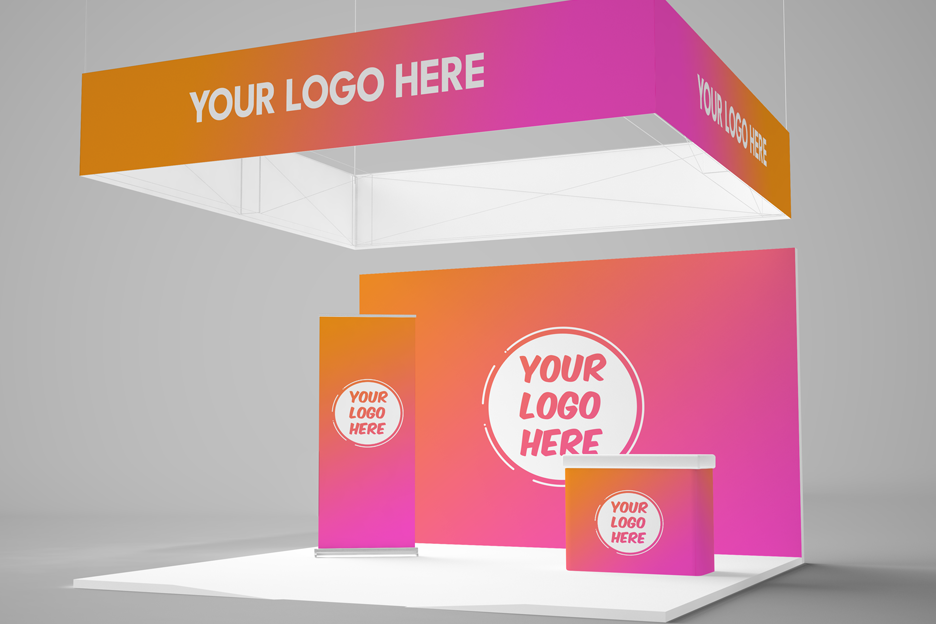
Principles of Effective Tradeshow Booth Design
At its core, tradeshow booth design should serve a purpose. Every design decision, from layout to graphics, should support a clear goal such as lead generation, product education, or brand awareness.
Effective tradeshow designs start with simplicity. Booths that try to communicate too much at once often overwhelm attendees and fail to deliver a clear message. Instead, strong designs focus on a primary value proposition that can be understood at a glance.
Consistency is equally important. Colors, fonts, imagery, and messaging should align with brand standards so the booth feels cohesive rather than pieced together. When design elements work together, the booth feels intentional and professional, reinforcing credibility from the moment attendees arrive.
These foundational principles are part of a larger tradeshow strategy that includes booth selection, displays, accessories, and follow-up, all of which are covered in the Tradeshow Booths & Displays: The Complete Guide to Tradeshow Marketing Success.
Layout and Traffic Flow
One of the most overlooked aspects of tradeshow booth design is layout. How people move through the booth directly affects engagement.
Open layouts tend to perform better than closed-off designs, especially in inline booths. Avoid placing large tables or displays directly at the front of the booth, as they can act as physical barriers. Instead, create an open entry point that encourages attendees to step inside naturally.
Once inside, the layout should guide visitors intuitively. Product demos, meeting areas, and giveaway stations should be clearly defined without requiring signage-heavy explanations. Clear paths reduce congestion and make it easier for staff to engage without interrupting traffic flow.
Layout decisions are closely tied to booth size. A design that works well in a 10×10 space may not translate to a 20×20 footprint. Aligning layout choices with the right booth size ensures the design supports, rather than limits, engagement.
Visual Hierarchy and Messaging
Visual hierarchy determines what attendees notice first, second, and third when approaching a booth. Without a clear hierarchy, even well-designed booths can feel confusing.
Primary messaging should be visible from a distance. This is often a headline or short value statement that communicates what the brand does or who it serves. Secondary messaging can support this with brief descriptors or product categories, while tertiary messaging should be reserved for closer viewing.
Tradeshow banners, backdrops, and signage play a major role in establishing this hierarchy. Vertical banners and large-format backdrops help elevate key messages above the crowd, while booth signage reinforces clarity once attendees are inside. When graphics are designed with hierarchy in mind, they work together rather than compete for attention.
Strong visual hierarchy also relies on restraint. White space, contrast, and scale all help guide the eye and make messaging easier to absorb in a busy environment.
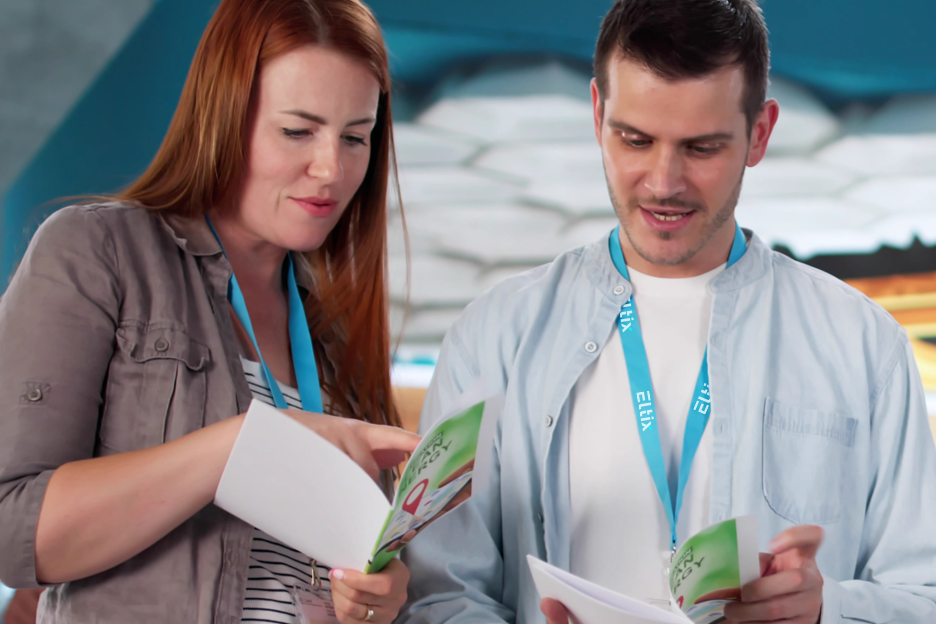
Interactive and Experiential Elements
Interaction does not have to mean complex technology or elaborate activations. The most effective experiential elements are often simple and purposeful.
Interactive elements might include hands-on product demos, touchable materials, sample kits, or small engagement stations that give attendees a reason to pause. These features encourage longer dwell time and create natural conversation starters for booth staff.
Importantly, interaction should feel optional and welcoming, not forced. Attendees should be able to engage at their own pace without feeling pressured to participate. This approach supports better conversations and aligns with a more comfortable booth experience.
Interactive elements work best when supported by the right accessories. Tables, lighting, flooring, and furniture all influence how easily attendees can interact within the space. When these details are planned intentionally, they enhance engagement without drawing attention away from the core message.
Design Trends to Watch
Tradeshow design trends continue to evolve, but the most impactful trends tend to focus on function rather than novelty.
Sustainability is becoming more important, with brands opting for reusable displays, modular components, and materials that reduce waste. Modular design also supports scalability, allowing booths to adapt across different events.
Personalization is another growing trend. Booths that speak directly to a specific audience or use case often feel more relevant than generic designs. This can be achieved through targeted messaging, product-focused zones, or tailored visuals.
Hybrid elements are also gaining traction, blending physical design with digital touchpoints such as QR codes, screens, or content hubs. These elements extend engagement beyond the booth without overwhelming the physical space.
While trends can inspire ideas, the most successful tradeshow booth designs prioritize clarity, comfort, and engagement over trying to be trendy for its own sake.
Tradeshow booth design plays a central role in attracting attention and supporting meaningful engagement on the show floor. When layout, messaging, graphics, and interactive elements are aligned, booths become easier to navigate and more inviting to explore.
For a broader view of how booth design fits into a complete tradeshow strategy, including displays, signage, accessories, giveaways, planning timelines, and ROI, explore our Tradeshow Booths & Displays: The Complete Guide to Tradeshow Marketing Success. It connects design decisions to real-world performance and helps teams plan booths that deliver results.