Tradeshows represent one of the largest line items in many B2B marketing budgets, yet they are often one of the hardest channels to evaluate. Booth space, displays, travel, staffing, and promotional materials add up quickly, and leadership teams want to know whether that investment is paying off.
Measuring tradeshow ROI is not just about counting leads. It requires thoughtful planning before the event, disciplined execution on-site, and structured follow-up afterward. When done well, ROI measurement helps justify spend, improve performance year over year, and guide smarter decisions about which events deserve continued investment.
Why Tradeshow ROI Starts with Planning
Tradeshow ROI cannot be measured accurately if success is not defined upfront. Before a single dollar is spent, teams should be clear on what the event is expected to accomplish and how outcomes will be evaluated.
For some organizations, success may be lead volume. For others, it may be pipeline influence, brand visibility, partner meetings, or product launches. These goals shape everything from booth design and staffing to giveaways and follow-up strategy.
Strong tradeshow planning includes establishing benchmarks, aligning sales and marketing expectations, and determining how performance will be tracked. This foundational work mirrors the broader approach outlined in the complete guide to tradeshow booths and displays, where planning decisions influence every downstream result.
Building a Tradeshow Checklist That Supports Measurement
A tradeshow checklist is more than a logistical tool. When built correctly, it becomes a framework for measurement.
Before the event, the checklist should include goal-setting, budget allocation, lead capture methods, and staffing plans. During the show, it should guide daily tracking of booth traffic, conversations, demos, and lead quality. After the event, it should support follow-up timelines and performance analysis.
Key checklist items that support ROI measurement include:
- Defined success metrics tied to business goals
- Lead capture systems integrated with CRM tools
- Clear ownership of follow-up responsibilities
- Timelines for post-show reporting and review
A checklist that connects planning, execution, and follow-up ensures that no part of the measurement process is left to guesswork.
Creating a Tradeshow Budget with ROI in Mind
Tradeshow budgets are often evaluated only on total spend, but meaningful ROI analysis requires more detail.A complete tradeshow budget should account for booth space, displays, shipping, labor, travel, promotional items, and supporting materials. Breaking costs into categories makes it easier to understand which investments contribute most to performance.
For example, a higher spend on booth design or signage may increase traffic and lead quality, while a well-chosen giveaway strategy can improve engagement and recall. Viewing the budget through a performance lens helps teams understand not just what was spent, but why.
Over time, this approach allows organizations to reallocate budget toward elements that deliver the strongest returns and reduce spend in areas that do not move the needle.
Measuring Tradeshow ROI Beyond Lead Counts
While lead volume is an important metric, it rarely tells the full story. Tradeshow ROI is best measured using a combination of quantitative and qualitative data.
Quantitative metrics may include:
- Number of leads captured
- Cost per lead
- Pipeline influenced or created
- Revenue attributed to the event
Qualitative metrics provide additional context:
- Lead quality and sales readiness
- Brand visibility and awareness
- Strategic conversations or partnerships
- Feedback from sales and event staff
Combining these metrics creates a more accurate picture of value. A booth that generates fewer but higher-quality leads may outperform one that captures a high volume of low-intent contacts.

The Role of Booth Design and Experience in ROI
Booth design plays a direct role in performance outcomes. Layout, messaging, signage, and accessories all influence how attendees interact with the space.
A booth that is easy to enter, visually clear, and comfortable encourages longer conversations and higher-quality engagement. Design choices that support traffic flow and messaging hierarchy help staff focus on meaningful discussions rather than directing foot traffic.
This is why ROI measurement should consider design decisions alongside performance data. Improvements in booth layout or visual presentation often correlate with measurable gains in engagement, as explored in tradeshow booth design ideas that drive traffic and engagement.
How Giveaways and Materials Impact Performance
Tradeshow materials and promotional items are often viewed as line items rather than strategic tools, but they can have a meaningful impact on ROI when used intentionally.
Well-chosen tradeshow giveaways support engagement, serve as conversation starters, and reinforce brand recall after the event. Materials that align with audience needs and booth goals tend to perform better than generic items distributed without context.
Evaluating which giveaways were most effective and how they were used on the show floor helps refine future strategies. Over time, this analysis supports smarter decisions about which promotional items truly contribute to performance, as outlined in the guide to giveaways that drive booth traffic.
On-Site Execution and Real-Time Tracking
ROI measurement does not stop once the show begins. On-site execution plays a critical role in performance outcomes.
Daily check-ins with booth staff help identify what is working and where adjustments are needed. Tracking conversations, demos, and engagement patterns allows teams to adapt messaging or layout in real time.
Simple metrics such as peak traffic times, most common questions, or frequently requested materials can provide valuable insight. These observations often inform improvements for future events and contribute to a stronger overall tradeshow strategy.
Post-Show Follow-Up and ROI Attribution
Post-show follow-up is where tradeshow investment turns into measurable business impact.
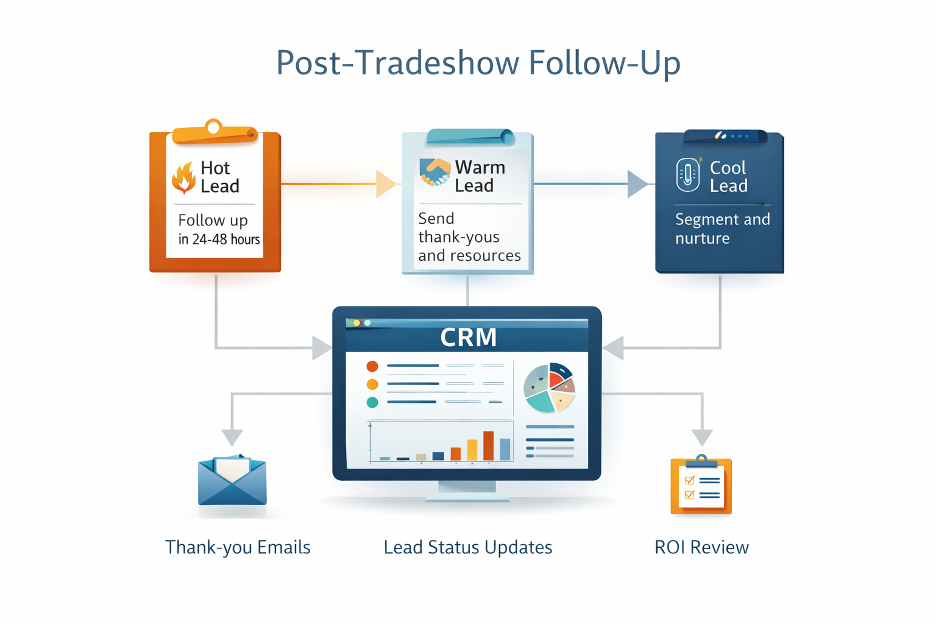
Leads should be prioritized quickly, with high-intent contacts followed up within 24 to 48 hours whenever possible. All interactions should be logged in a CRM to support accurate attribution and long-term analysis.
Post-event reporting should evaluate both immediate outcomes and longer-term pipeline influence. Reviewing performance across multiple events helps identify trends, refine budgets, and determine which shows consistently deliver value.
This structured approach transforms tradeshow ROI from a single-event report into an ongoing performance framework.
Improving Tradeshow Performance Year Over Year
The most valuable ROI insights come from comparing performance across events and over time.
Year-over-year analysis highlights which tradeshows deliver consistent results, which design or messaging changes improved engagement, and where budget adjustments made the biggest difference. This data-driven approach helps teams justify spend to stakeholders while continuously improving execution.
When tradeshow planning, design, giveaways, and follow-up are aligned with clear measurement goals, events become more predictable, scalable, and defensible as part of a broader B2B marketing strategy.
Measuring tradeshow ROI requires more than tallying leads after the show. It starts with intentional planning, continues through thoughtful execution, and is completed with disciplined follow-up and analysis.
For a complete view of how ROI measurement fits into tradeshow success, including booth types, design strategy, signage, accessories, and promotional products, explore our Tradeshow Booths & Displays: The Complete Guide to Tradeshow Marketing Success. It connects planning decisions to performance outcomes and helps teams build tradeshow programs that deliver lasting value.