Tradeshow booth size plays a bigger role in performance than many teams expect. The footprint you choose affects visibility, layout, engagement, staffing needs, and budget. A booth that is too small can feel cramped and limiting, while one that is too large can stretch resources without delivering proportional value.
Choosing the right tradeshow booth size starts with understanding how you plan to use the space. Goals, audience, and event importance should all influence whether a 10×10, 10×20, or 20×20 booth makes the most sense for your strategy.
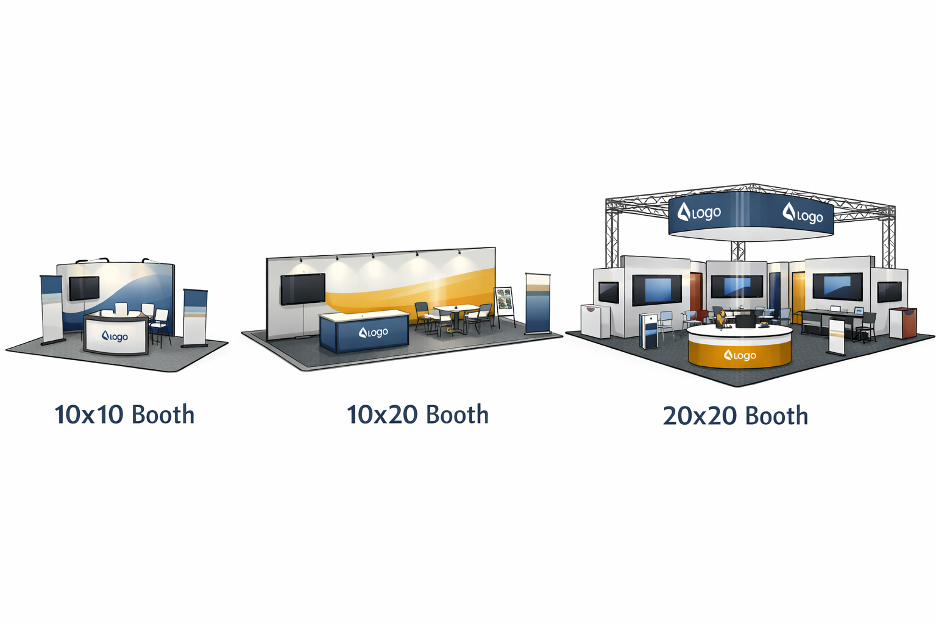
Why Booth Size Matters
Booth size determines how attendees experience your brand on the show floor. It influences how easily people can enter the space, how long they stay, and how comfortably conversations unfold.
Smaller booths often rely on clear messaging and efficient layouts to perform well, while larger booths allow for multiple engagement zones, demos, or meeting areas. Size also affects staffing requirements, shipping costs, and the types of displays and accessories that can be used effectively.
When booth size aligns with goals, the space feels intentional rather than constrained or underutilized. That alignment is a key theme across the broader tradeshow planning process outlined in the Tradeshow Booths & Displays: The Complete Guide to Tradeshow Marketing Success.
10×10 Tradeshow Booths
A 10×10 tradeshow booth is the most common booth size and often the entry point for many exhibitors. With limited square footage, success in a 10×10 booth depends on clarity and restraint.
Because space is tight, messaging must be concise and visible from the aisle. Vertical elements such as banners or backwall graphics help maximize visibility without crowding the floor. Tables and accessories should be minimal to avoid blocking entry.
10×10 booths work well for:
- Brand awareness at regional or smaller events
- First-time exhibitors testing a show
- Focused conversations rather than full demos
Portable displays, pop-up backwalls, and compact accessories are typically the best fit for this footprint. While custom builds are less common at this size, thoughtful design choices can still create a strong presence.
10×20 Tradeshow Booths
A 10×20 tradeshow booth offers greater flexibility while still remaining manageable in terms of cost and logistics. This size allows for clearer separation between engagement areas without overwhelming staff or attendees.
With a 10×20 footprint, brands can introduce dedicated zones for demos, meetings, or product displays. Layout options expand, making it easier to guide traffic flow and support longer conversations.
10×20 booths are often a good fit for:
- Growing brands increasing their tradeshow presence
- Events where deeper product conversations are expected
- Teams that want more flexibility without committing to a large island booth
Both portable and custom tradeshow displays can work well at this size. Modular systems are especially useful, as they allow brands to reconfigure layouts across different events while maintaining consistency.
20×20 Tradeshow Booths
A 20×20 tradeshow booth is typically considered a large footprint and is often used at flagship events or high-priority tradeshows. This size allows for maximum creativity and engagement but also requires more planning and resources./span>
With a 20×20 booth, brands can create immersive experiences with multiple zones, including demos, meeting spaces, storage, and hospitality areas. Visibility increases significantly, especially when combined with overhead signage or taller structures.
20×20 booths are best suited for:
- Major industry events with high attendee volume
- Product launches or brand announcements
- Organizations with dedicated event teams and budgets
Custom tradeshow booths are most common at this size, as they allow for tailored layouts and integrated features. However, modular custom systems can still provide flexibility and reuse across multiple shows.
For teams considering this footprint, it’s important to ensure that staffing, messaging, and follow-up processes are scaled appropriately so the larger space delivers measurable value.
Matching Booth Size to Goals and Budget
Choosing between a 10×10, 10×20, or 20×20 tradeshow booth should always start with goals rather than assumptions.
If the primary objective is visibility and lead capture at multiple events, a smaller or mid-sized booth with a strong display strategy may deliver the best return. If the goal is high-impact engagement at a single flagship show, a larger footprint may be justified.
Budget considerations go beyond booth space fees. Larger booths typically require higher investment in displays, shipping, labor, and staffing. Evaluating total cost alongside expected outcomes helps ensure that booth size supports ROI rather than undermines it.
Many organizations use a tiered approach, reserving larger booths for key events while relying on smaller footprints for regional or secondary shows. This strategy often pairs well with modular or custom display systems that can adapt to different booth sizes, as outlined in our guide to custom tradeshow displays and portable options.
Tradeshow booth size influences everything from design and layout to engagement and budget. By aligning booth dimensions with event goals and resources, brands can create spaces that feel purposeful and perform well on the show floor.
For a broader view of how booth size fits into a complete tradeshow strategy, including display types, design ideas, signage, accessories, giveaways, and ROI planning, explore Tradeshow Booths & Displays: The Complete Guide to Tradeshow Marketing Success. It connects each decision to real-world performance and long-term results.