
Let’s be honest – the world of polo shirts can be a bit confusing. Cotton or performance fabric? Pique or jersey? Should it be fitted or relaxed? Don’t worry; we’re here to demystify the polo and help you find your perfect match. Think of this as your ultimate polo shirt cheat sheet. Plus, if you’re looking for custom polo shirts that make your team or brand stand out, we have you covered!
Defining What a Polo Shirt Is
So what exactly is a polo shirt? While most of us can picture one, it has specific features that set it apart from a regular t-shirt or dress shirt.
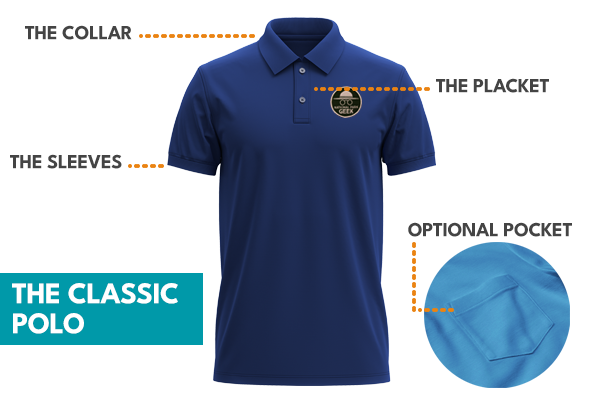
Here’s the breakdown of a classic polo:
- The Collar: A soft, knitted collar that stands up (unlike a t-shirt’s flat crewneck).
- The Placket: That short front opening with 2-3 buttons.
- The Sleeves: Short sleeves with ribbed cuffs.
- Optional Pocket: You’ll sometimes see a small pocket on the left chest.
Exploring Polo Shirt Materials
The fabric of your polo shirt makes a huge difference in how it feels, how it looks, and how long it lasts. Let’s break down the most common options:
- Cotton: The classic choice. Soft, breathable, and comes in a range of weights. Cotton polo shirts are great for that traditional polo feel.
- Performance Fabrics: Typically polyester or blends. Think moisture-wicking, quick-drying, and often wrinkle-resistant. Performance polo shirts are ideal for activewear or hot climates.
- Blends: Combine cotton with synthetics for both comfort and durability. A popular choice for all-around polos.
Choosing the Right Polo Material for You
Choosing the right polo shirt material might seem like a daunting task, but it can be quite simple if you consider the following criteria:
- Lifestyle: Athlete or outdoor enthusiast? Performance fabrics are your friend.
- Climate: Live somewhere hot and humid? Opt for lightweight cotton or moisture-wicking.
- Budget: 100% cotton can be pricier, blends offer a good balance.
- Look and Feel: Do you prefer a crisp look or a more relaxed drape? Going with a more tailored look can result in a higher cost per shirt.
Pro-tip: We offer a wide variety of materials to suit your needs, from classic cotton to advanced performance blends. Let’s find the perfect fit for your brand!
Polo Shirt Styles: Pique vs. Jersey Knit
You’ve probably heard the terms “pique” and “jersey” when shopping for polos. These refer to the knit, or how the fabric is constructed, and they give the shirt a different look and feel.
- Pique Knit: Textured, almost waffle-like appearance. Feels a bit heavier and offers a more structured look. Think of it as the dressier polo option.
- Jersey Knit: Smooth, flat fabric, like your favorite t-shirt. Lightweight and drapes loosely, making it a more casual choice.
Which Knit is Right for You?
Consider the following to decide which polo knit is right for you:
- Occasion: Pique for business events, jersey for laid-back settings.
- Personal Style: If you like a crisp look, go pique. Prefer a relaxed vibe? Jersey is your style.
Achieving the Perfect Polo Shirt Fit
A well-fitting polo can make all the difference in your appearance. Too tight, and it’s uncomfortable. Too baggy, and it looks sloppy. Here’s how to find that perfect fit:
- Shoulders: The seam should line up with the end of your shoulder bone.
- Sleeves: Midway down your bicep is ideal, and they should hug your arm gently (not squeeze!).
- Length: Untucked, it should hit a couple of inches below your belt buckle in front, and about mid-pocket in the back.
- Chest: You should be able to comfortably pinch about an inch or two of fabric on either side.
Pro-tip: Different body types will suit certain fits better. Unsure about your ideal polo shirt fit? Consult with our promo experts for guidance!
How Long Should a Polo Shirt Be?
Polo shirts are generally intended to be worn both tucked and untucked. The ideal length makes both looks work:
- Untucked: Front hem hitting a few inches below the belt, back hem around mid-pocket (as mentioned above).
- Tucked: Enough length to stay tucked during movement but not so long it billows out.
- Visual: Simple line drawing of a person showing these ideal lengths would be helpful!
How to Fold a Polo Shirt
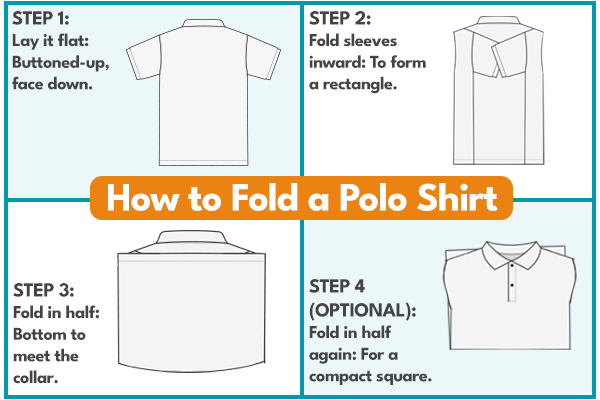
Keep your polo shirts looking sharp, whether in drawers, packing for a trip, or displaying for your recipients to receive. Here’s a quick and easy folding method:
- Lay it flat: Buttoned-up, face down.
- Fold sleeves inward: To form a rectangle.
- Fold in half: Bottom to meet the collar.
- Fold in half again (optional): For a compact square.
Hopefully by now you feel a lot more educated on polo shirt fit, materials, and care. Remember these key takeaways when choosing the ideal polo:
- Material Matters: Select based on your needs and preferences. Consider your lifestyle (active or more relaxed?), desired comfort level (breathable cotton vs. moisture-wicking performance fabrics), and how important durability and wrinkle-resistance are to you.
- Fit is King: A good fit elevates any polo. A well-fitting polo flatters your figure, boosts confidence, and looks more polished. Don’t settle for ill-fitting sleeves, a too-tight chest, or awkward lengths.
- Pique or Jersey: Choose the vibe that suits your style. Pique offers that classic, preppy polo look, while jersey gives off a more relaxed, casual feel. Think about the image you want to project and choose accordingly!
Ready to upgrade your wardrobe or outfit your team with custom polo shirts that reflect your brand? We offer a wide selection of premium fabrics, fits, and expert customization to make your vision a reality.



Good day! This is my first visit to your blog!
We are a collection of volunteers starting a new initiative in a community in the same niche. Your blog provided us with valuable
information to work on. You have done an extraordinary job!