Tradeshows remain one of the most effective B2B marketing channels because they combine brand visibility, face-to-face conversations, and real-time lead generation in a single environment. When done well, a tradeshow presence can accelerate sales cycles, introduce new products, and strengthen brand credibility in ways digital-only campaigns cannot.
Success at a tradeshow does not come from a single decision. It is the result of thoughtful planning across booth selection, display design, signage, promotional products, staffing, and follow-up strategy. This guide breaks down each of those components to help marketers, sales teams, and event planners build tradeshow booths and displays that attract attention, drive engagement, and deliver measurable ROI.
What Is a Tradeshow Booth and Why It Matters
A tradeshow booth is a branded space within an exhibition hall where a company presents its products, services, and messaging to attendees. Booths can range from small tabletop displays to large custom-built environments, but they all serve the same core purpose: to create meaningful interactions with a targeted audience.
Tradeshow booths and displays play a direct role in brand visibility by acting as a physical extension of your brand. From across the show floor, your booth design, signage, and layout communicate who you are and what you offer before a single conversation takes place. Once attendees engage, the booth becomes a setting for lead capture, product demonstrations, and sales discussions that move prospects further down the funnel.
A well-executed booth does more than look professional. It supports staff conversations, encourages attendees to linger, and provides clear next steps through giveaways, demos, or scheduled follow-ups.
Timeline for Planning a Tradeshow
Successful tradeshows are planned months in advance. A structured timeline helps teams stay on budget, avoid last-minute costs, and maximize impact on the show floor.
Pre-Planning: 12 to 18 Months Before the Event
Start early to secure the best booth locations, vendors, and pricing.
Set clear goals by defining specific outcomes such as lead volume, brand awareness, or product launches. Goals should be measurable and aligned with broader marketing and sales objectives.
Research and select events based on audience demographics, exhibitor mix, past attendance, and relevance to your industry. Not every show delivers the same value.
Develop a comprehensive budget that includes booth space, display design or rental, shipping, travel, staffing, promotional products, and a contingency buffer of roughly 20 percent.
Book booth space early and choose locations strategically. High-traffic areas near entrances, food courts, or complementary exhibitors often deliver stronger visibility.
Planning Timeline Overview
Use a phased approach to stay organized, adjusting based on booth size and show complexity.
9 to 12 months out
- Register as an exhibitor and review event rules and contracts
- Assemble internal teams across marketing, sales, and design
- Begin high-level booth concept planning
6 to 9 months out
- Finalize booth design and order or reserve displays
- Plan graphics, lighting, flooring, and interactive elements
- Order promotional items and giveaways
- Book travel, accommodations, and freight services
3 to 6 months out
- Launch pre-show marketing including email campaigns and social promotion
- Train booth staff on goals, messaging, and lead qualification
- Set up lead capture tools and CRM integrations
1 to 3 months out
- Confirm service orders such as electricity, internet, and rigging
- Increase promotional outreach using event hashtags and invitations
- Prepare printed materials, demos, and presentation assets
1 to 4 weeks out
- Hold final staff briefings, test setup and walkthroughs
- Pack and ship booth materials
- Test all technology, demos, and interactive elements

Types of Tradeshow Booths and Displays
Tradeshow booths come in a variety of sizes and formats, each suited to different goals and budgets.
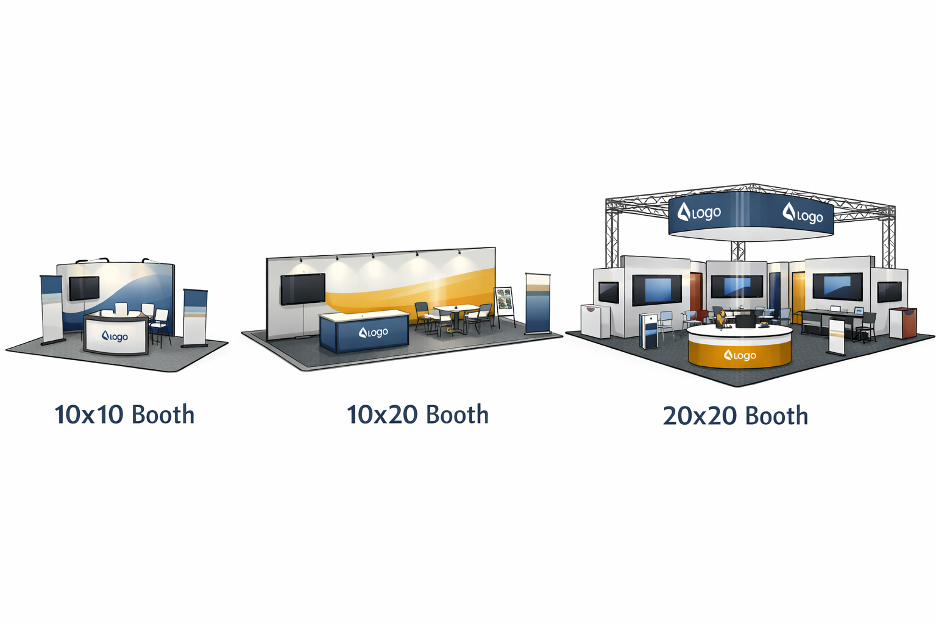
Standard inline booths such as 10×10 or 10×20 spaces are common entry points and work well for focused messaging and giveaways. Larger island booths like 20×20 layouts allow for multiple engagement zones, demos, and meeting areas.
Beyond size, display formats vary widely. Custom tradeshow displays offer fully branded, high-impact environments designed for repeated use or flagship events. Portable and pop-up displays provide flexibility and cost efficiency for teams attending multiple shows. Tabletop displays are ideal for smaller events, sponsorship areas, or limited floor space.
Choosing the right booth type depends on goals, audience, and long-term event strategy. For deeper guidance, check out our booth size and custom display guides.
Tradeshow Booth Design and Visual Impact
Booth design directly affects foot traffic and engagement. Attendees often decide whether to stop within seconds, making visual clarity and layout critical.
Effective design starts with clear messaging that can be understood at a distance. Strong branding, concise headlines, and a focused value proposition help draw attendees in. Once inside the booth, traffic flow should feel open and inviting, with no physical or visual barriers blocking entry.
Design should support conversation. Dedicated areas for demos or meetings, comfortable spacing, and intentional lighting all improve dwell time. Visual hierarchy matters as well, guiding attendees from headline messaging to supporting details and calls to action.
Click through to our guide on tradeshow booth design for more ideas and inspiration.
Banners, Backdrops, and Signage
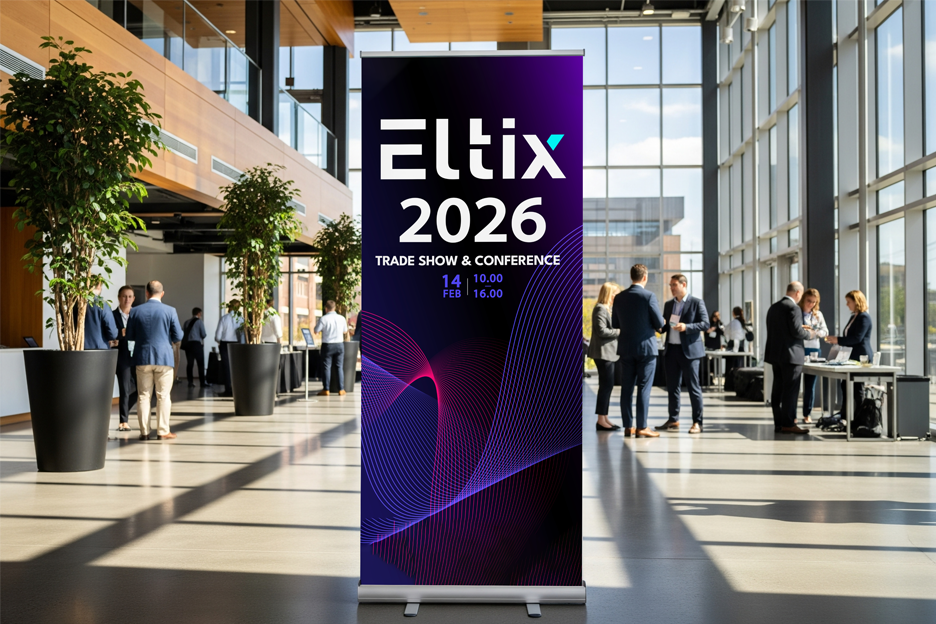
Graphics are often the first element attendees notice. Banners, backdrops, and signage establish brand presence and set expectations before any interaction occurs.
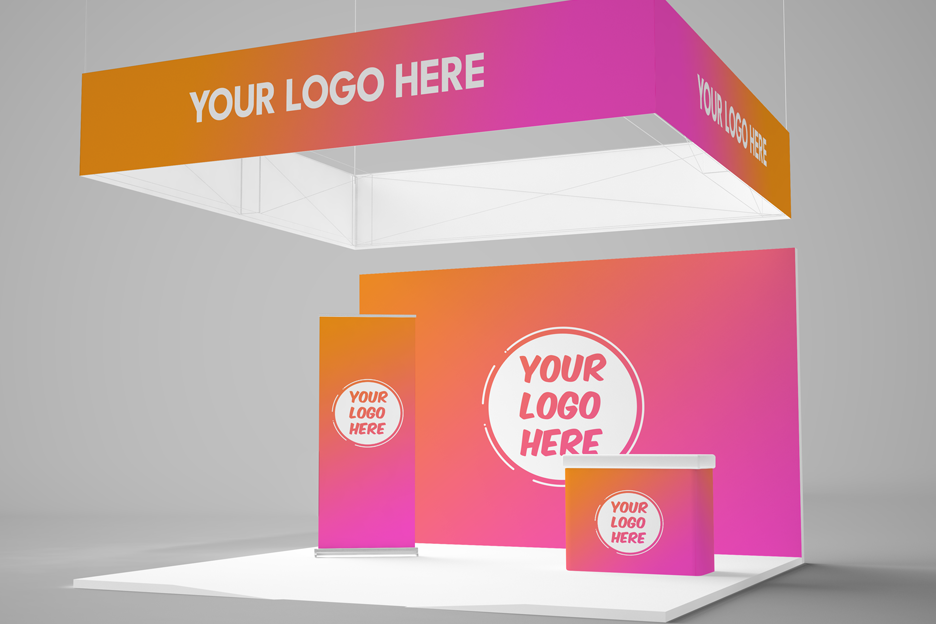
Large-format banners and backdrops create vertical visibility across crowded floors, while booth signage reinforces messaging and helps with wayfinding. For some events, exterior or aisle-facing signs can capture attention before attendees even enter the exhibit hall.
Graphics should be legible from a distance, consistent with brand guidelines, and designed to complement the booth layout rather than overwhelm it. For a deeper breakdown of formats and best practices, check out our banners and signage guide.
Tables, Accessories, and Booth Enhancements
The details inside a booth often determine whether an attendee stays for a quick glance or a meaningful conversation.
Table covers and tablecloths reinforce branding and provide clean, professional surfaces for materials or demos. Flooring improves comfort for both staff and visitors, encouraging longer interactions. Lighting enhances visibility and mood, while furniture supports conversations and private discussions.
These elements may seem secondary, but together they significantly influence engagement and perception. For more on this, read our booth accessories guide.
Tradeshow Giveaways and Promotional Products
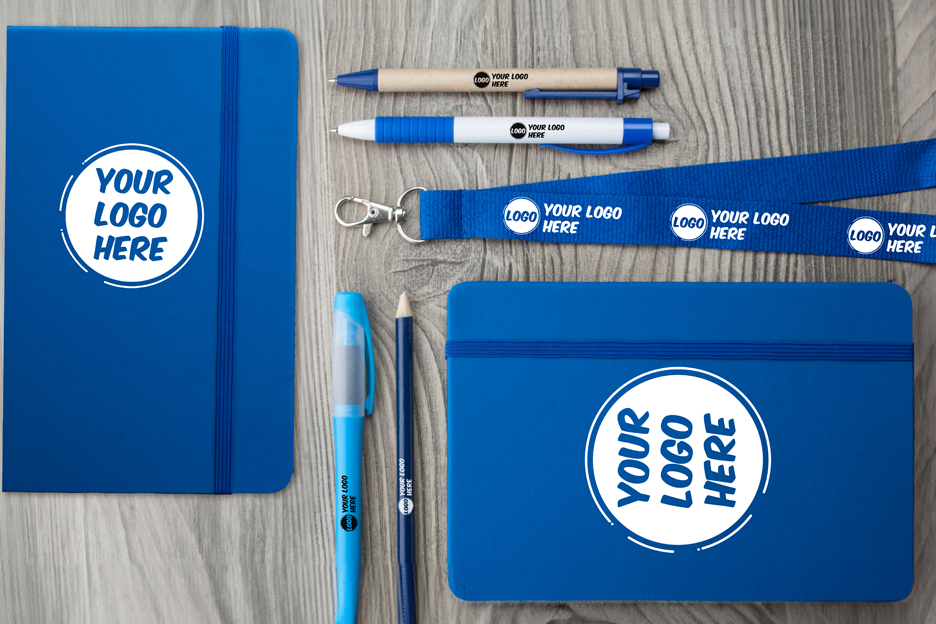
Giveaways remain one of the most effective tools for attracting attendees and reinforcing brand recall after the show.
The most successful tradeshow promotional products are useful, relevant, and aligned with the audience. They support engagement by encouraging booth visits and provide a tangible reminder of the brand long after the event ends.
Giveaways also serve as conversation starters and lead capture incentives when paired with demos or interactions. For more on this, take a look at our tradeshow giveaways guide for strategy and product selection.
Planning, Budgeting, and Measuring ROI
Tradeshow success must be measured to justify investment and improve future performance.
Planning and budgeting should account for all costs, from booth space and displays to shipping, staffing, and promotions. Clear metrics should be established before the event, including lead volume, cost per lead, and conversion outcomes.
During and after the show, tracking performance helps teams understand what worked and where improvements are needed. For a full breakdown on how to financially plan for a tradeshow, check out our tradeshow planning and ROI guide.
Virtual, Hybrid, and Modern Tradeshow Formats
Modern tradeshows increasingly blend physical and digital experiences. Virtual and hybrid formats allow brands to reach broader audiences while maintaining personal engagement.
Even in virtual settings, physical promotional products can support engagement through shipped kits or post-event follow-ups. For more on this, click through to our virtual tradeshow guide.
Follow-Up Strategies for Post-Tradeshow Engagement
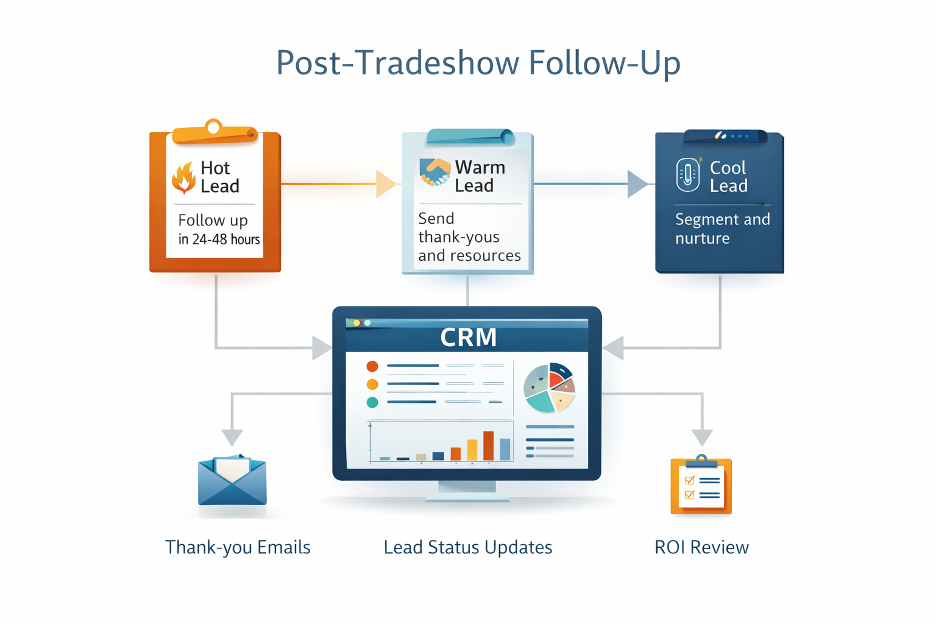
Post-show follow-up is where tradeshow investment turns into revenue. Without a clear follow-up plan, even strong lead capture loses value.
Within the first 24 to 48 hours, prioritize high-intent leads and begin personalized outreach. Send tailored thank-you messages, relevant resources, and next-step invitations. All leads should be entered into a CRM and segmented for ongoing nurturing.
Internal debriefs are equally important. Review lead quality, engagement levels, and overall ROI. Identify what worked, what did not, and how future tradeshows can be improved through better booth design, staffing, or promotional strategy.
Tradeshow success is built through intentional planning, thoughtful booth design, strategic promotional products, and disciplined follow-up. When each element works together, tradeshows become one of the most powerful tools in a B2B marketing strategy.
Marco Promos supports every stage of that process, from banners and displays to giveaways and booth accessories. Use this guide as a starting point, then explore the deeper resources linked throughout to build a tradeshow presence that delivers real results.